I wrote about the 170,000 pages last week, and about the wet mops. This is the other half: what the exposure is doing to bodies now, a quarter-century later, and why the timing is the least surprising thing about it.
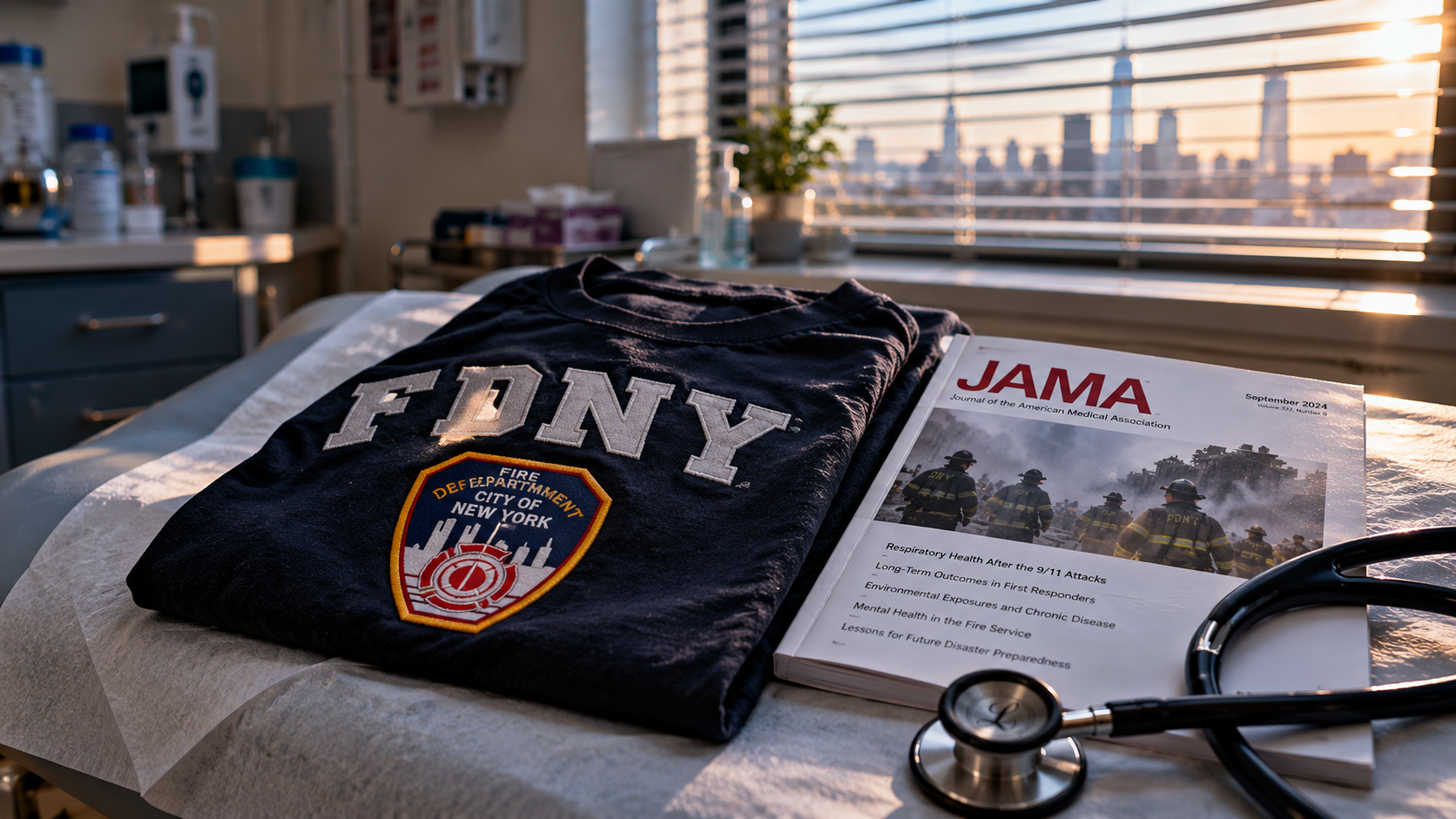
Inside Climate News reports on the released records alongside a concurrent paper in JAMA. The picture is chronic, dynamic, and multi-organ. Respiratory disease from pulverized cement. Asbestos-linked cancers. Benzene-associated lymphoma. Persistent PTSD and substance use disorders. And the cancers are surfacing now, at the 20-to-25-year mark, because that’s when they were always going to.
Dr. Philip Landrigan, who led the original worker evaluations at Mount Sinai, told them city officials “were not being honest” about air safety in the weeks after the collapse. I’ve read the memos. He’s right, and he’s being polite.
What latency is, and why this is the cleanest example there’s ever been
When you inhale an asbestos fiber, nothing happens. Not that day, not that year. The fiber lodges in the lung or migrates to the pleura and sits there. The cellular damage accumulates over decades. Mesothelioma shows up 20 to 50 years after exposure. Lung cancer from asbestos, 15 to 35. Benzene and the blood cancers it causes, five to 20. Every one of those is a known number, established in shipyard workers and refinery workers and insulators long before 2001.
So on September 12, 2001, an industrial hygienist could have told you, with confidence, that the people breathing that dust would start showing up with these cancers in the 2020s. Not because of a model. Because of the shipyards.
That’s what the JAMA paper is documenting. The exposure was measurable in real time; the sampling existed. The reassurance was political. And the latency did the rest, exactly as predicted, exactly on time.
The other thing the records show
The dust was described in the coverage as containing more than 2,500 contaminants. Pulverized concrete, which is alkaline enough to burn airways. Glass fibers. Asbestos from the fireproofing on the lower floors. Lead from the electronics. Benzene and PAHs from the fires, which burned until December. Dioxins from burning plastics.
That’s not one exposure. It’s a mixture, and the health outcomes are a mixture too, which is why the World Trade Center Health Program covers cancers, lung disease, GI disease, and mental health together. The body doesn’t sort them.
The teaching point I keep coming back to
“The air is safe to breathe” is a sampling claim. It means someone measured, compared to a number, and the number was under. When it’s said without the sampling behind it, or with sampling that says the opposite in a file somewhere, it’s a press conference claim wearing a lab coat.
Every OSHA 500 module on respiratory protection should end with this. Not the deaths, which are hard to teach with. The timing. Tell a class in 2026 that a cancer diagnosed this year was caused in 2001 by a decision made in a room where the data said one thing and the microphone said another. That’s the whole lesson. The latency isn’t the villain. The latency is just the clock.
What we know
- Inside Climate News (September 15, 2026) reports on the released city records and a concurrent JAMA paper documenting chronic, multi-organ WTC exposure effects: respiratory disease, asbestos-linked cancers, benzene-associated lymphoma at 20–25 year latency, plus persistent PTSD and substance use disorders.
- Dr. Philip Landrigan, who led the original worker evaluations, said city officials “were not being honest” about air safety after the collapse.
- Dust described as containing more than 2,500 contaminants.
What we don’t know yet
- The JAMA paper’s specific incidence figures; pull the paper before citing numbers.
- How the record release affects pending claims and the WTC Health Program’s survivor enrollment.
Sources
- Inside Climate News, September 15, 2026
- Earlier: 01-nyc-911-air-quality-records-harding-memo_2026-09-10
Corrections: If we got something wrong, tell us at kelly.sacredintel@gmail.com. We fix errors publicly and note the change here.