Disclosure: I run a company that sells home water testing kits, including for lead. This story is a demand signal for exactly that product. Read accordingly.
The Lead and Copper Rule Improvements required every public water system in the country to file an inventory of its service lines, the pipe that runs from the main in the street to your house, and say what each one is made of. The Associated Press went through the filings. Roughly 6,300 systems serving 3.8 million people haven’t filed. About 3,500 systems say, in so many words, that they don’t know what their pipes are made of. Nationally, one in five service lines is of unknown material.
Some cities have done the work and the numbers are ugly. Buffalo reports 45 percent of its lines are lead. Fredonia, 28 percent. Chicago, with the most lead lines of any city in the country, still can’t identify close to one in ten.
About 4 million homes are still on lead pipes. Replacement runs $8,000 to $15,000 per line. The rule requires systems to replace 10 percent of their lead lines per year for ten years, starting in 2027.
The number that matters isn’t the lead. It’s “unknown.”
Here’s why this is an inventory story and not a lead story.
A utility that knows it has lead lines can plan. It can prioritize the ones near schools and daycares, it can budget, it can notify the households. A utility that doesn’t know what its pipes are made of can’t do any of that, and neither can you. “Unknown” doesn’t mean “probably fine.” Historically, unknown lines in older systems turn out to be lead at a high rate once someone digs, because the records that would have said “copper” are the same records that got lost.
So if you’re in one of those systems, and the utility can’t tell you, there’s exactly one way to resolve the question for your house: test at the tap. First-draw sample after the water’s sat overnight, because that’s when lead that’s leached from the pipe is at its highest. That’s the only measurement that describes your faucet instead of the system average.
Why utilities don’t know
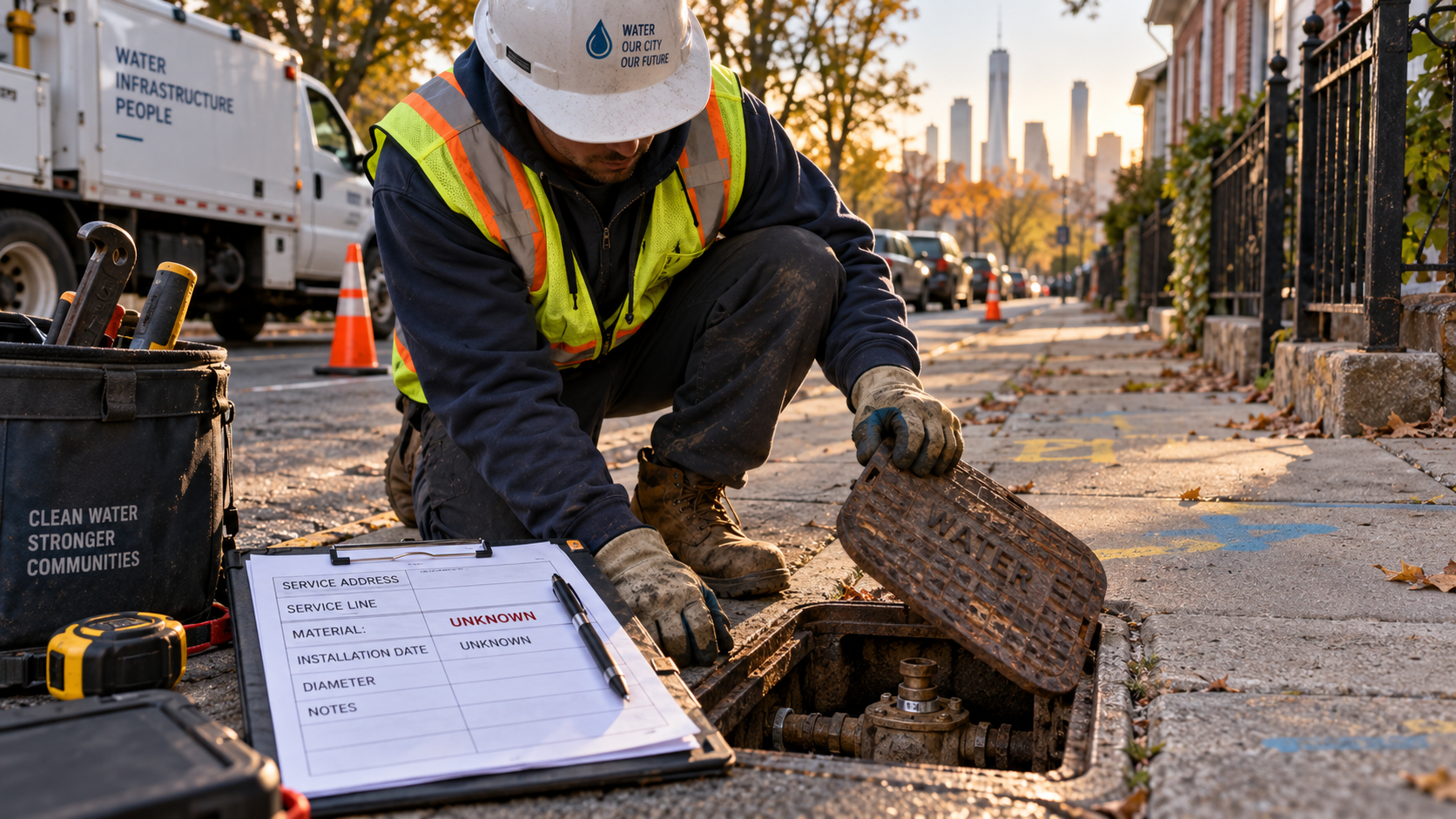
It’s not laziness, mostly. Service lines were installed by plumbers a century ago, half the line belongs to the homeowner and half to the utility, and the records, where they exist, are paper cards in a basement or a note on a tap card that says “lead?” with a question mark. Some cities digitized. Most didn’t. The rule required them to look, and looking at a hundred thousand lines costs money that wasn’t budgeted, so “unknown” is often the honest answer for a system that hasn’t dug yet. That doesn’t make it a safe answer. It makes it a placeholder.
What to do before 2027
Ask your utility what your service line is. They’re required to have made a determination, even if it’s “unknown,” and they’re required to tell you. If the answer is unknown or lead, and there’s a kid or a pregnant woman in the house, test. If the test comes back high, a certified filter for lead at the kitchen tap is the interim measure, and the utility’s replacement schedule is the long-term one.
The rule is a good rule. It’s also the first time in the history of American water regulation that utilities have been made to admit how much they don’t know. Take the admission seriously.
What we know
- ~6,300 public water systems serving 3.8 million people have not filed LCRI service line inventories; ~3,500 report unknown pipe material.
- One in five service lines nationally is of unknown material.
- Buffalo: 45% lead. Fredonia: 28%. Chicago: nearly 10% unidentified.
- ~4 million homes on lead pipes; replacement $8,000–$15,000 per line; 10%/year replacement mandate starting 2027.
What we don’t know yet
- Which Long Island systems are among the non-filers or unknowns. Pull the state inventory data.
- How EPA will enforce against non-filing systems.
Sources
Associated Press (via ClickOrlando), September 10, 2026: https://www.clickorlando.com/health/2026/09/10/the-push-to-remove-lead-pipes-is-on-thousands-of-water-systems-still-dont-know-where-theirs-are/
Corrections: If we got something wrong, tell us at kelly.sacredintel@gmail.com. We fix errors publicly and note the change here.