Disclosure: I run a company that sells home water testing kits, including for PFAS. This article isn’t about that, and I’m not going to tell you to buy one. You should know it anyway.
Here’s a thing most people don’t know about a landfill: it rains on it.
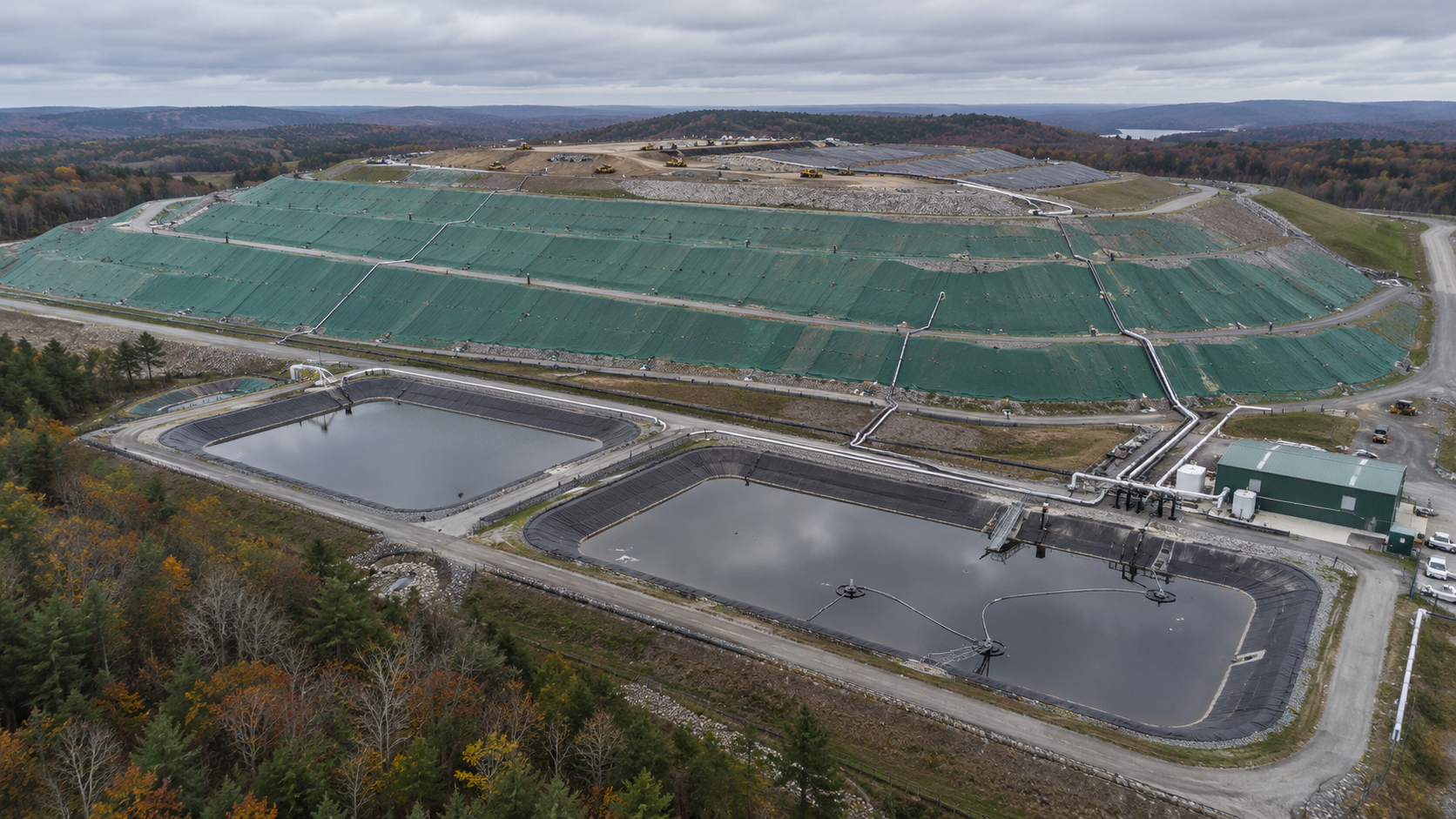
The water goes in the top, works its way down through decades of garbage, and picks up everything that dissolves along the way. What comes out the bottom is a liquid called leachate, and it is exactly as pleasant as it sounds. Modern landfills have liners and collection systems to catch it. That’s the good news. The bad news is what happens next.
For the most part, collected leachate gets trucked or piped to a sewage plant. A water resource recovery facility, if you want the term on the permit. And a sewage plant was designed to handle what comes out of your bathroom. Bacteria, nutrients, solids. It was not designed for forty years of nonstick pans, stain-resistant carpet, waterproof jackets, dental floss, fast-food wrappers, and firefighting foam, all of which contain PFAS, and all of which have been going into landfills since before anybody knew what PFAS was.
Sewage plants don’t remove PFAS. They weren’t built to. The molecules are small, they dissolve in water, and the carbon-fluorine bond that makes them useful in a frying pan makes them ignore every biological process a treatment plant runs on. So the PFAS goes in with the leachate, rides through the plant, and comes out the other end in the effluent. On Long Island, “the other end” is the Great South Bay, the Sound, or a groundwater recharge basin. And the groundwater is the sole-source aquifer that every one of the 2.8 million people on this island drinks from. There is no backup reservoir. Sole-source means sole-source.
What the rule does
The DEC’s proposal amends 6 NYCRR Parts 360 and 363, the state’s solid waste regulations, to say the following: if you’re a municipal solid waste landfill or a construction-and-demolition debris landfill with a leachate collection system, you treat your leachate for PFAS before it goes to a sewage plant or any other authorized discharge point.
Two more pieces matter as much as that sentence.
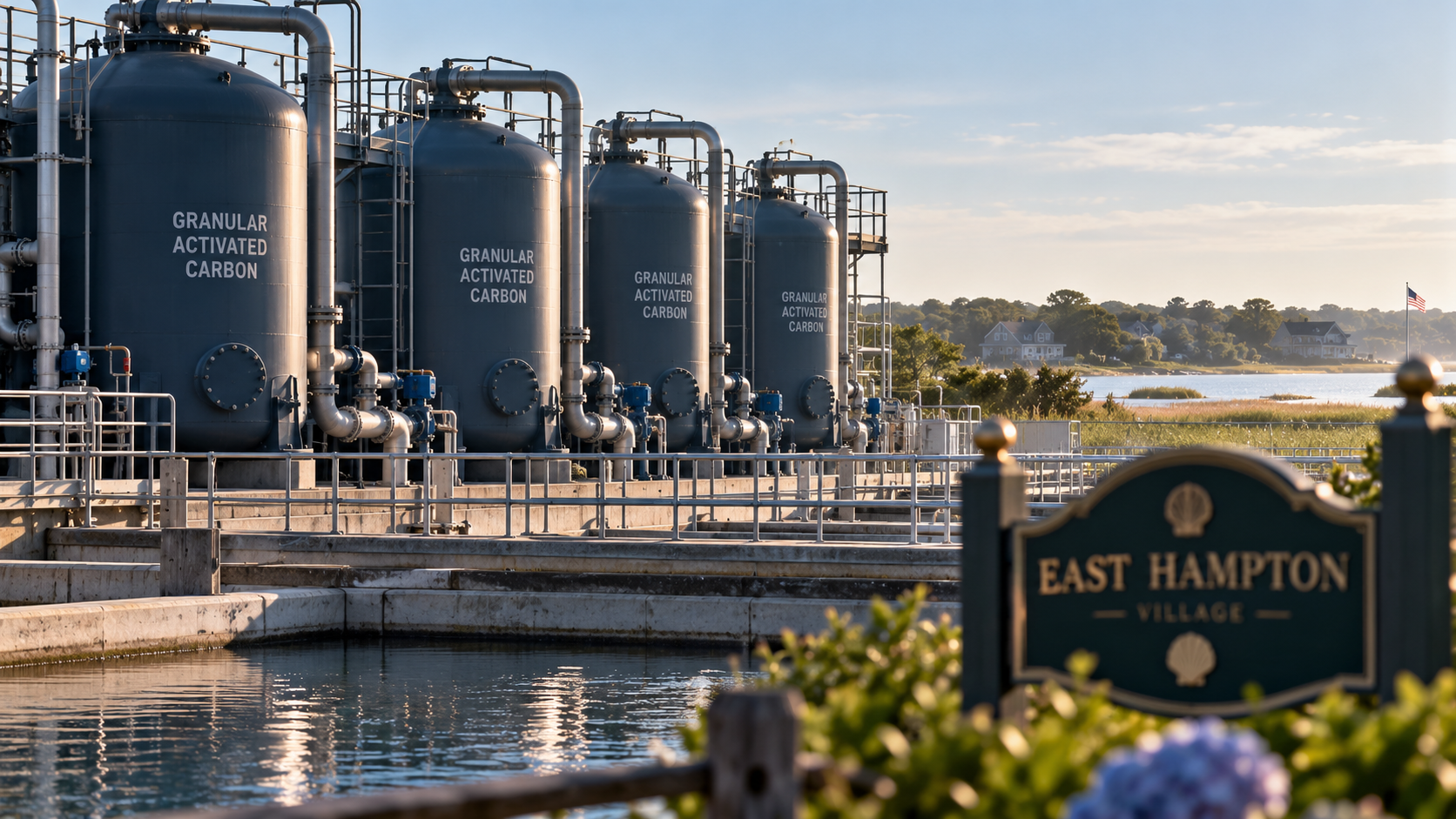
First, treatment doesn’t destroy PFAS. Almost nothing does at scale. Treatment concentrates it. You run leachate through granular activated carbon, or ion exchange resin, or reverse osmosis, or foam fractionation, and what you get is cleaner water plus a smaller volume of much dirtier something: spent carbon, spent resin, RO concentrate, foam. The rule requires that these concentrated residuals be disposed of in a way that doesn’t reintroduce the contaminants to the environment. That’s the state saying, out loud, that it knows the game of moving PFAS from one hole to another, and it wants to see the receipt.
Second, this is first-in-the-nation at the state level. Other states have PFAS limits on drinking water. Some have effluent limits on specific dischargers. Nobody has told every landfill with a collection system that the leachate is their problem to fix before it leaves the property. New York is the test case, and every other state with a landfill over an aquifer is watching.
Why Long Island is the reason this exists
I’ll be honest about why I’m writing 1,500 words on a solid waste regulation. Brookhaven’s landfill sits on top of the water I give my kids.
The Brookhaven plume fight has been running for the better part of a decade, and the disputed pathway was always leachate. Not the ash. Not the odor complaints, though God knows there were odor complaints. The question was: leachate goes to a sewage plant, sewage plant discharges, discharge reaches groundwater, groundwater reaches wells. Every link in that chain was argued about. This rule is the state reaching in and cutting the first link.
It won’t fix the plume that’s already there. Nothing in this rule is retroactive to contamination that left the site in 2009. But it changes what leaves the site in 2027.
What it creates, if it’s adopted
Recurring, verifiable obligations. That’s the phrase to hold onto.
Influent sampling. What’s in the leachate before treatment.
Effluent sampling. What’s in it after.
Treatment-performance demonstration. Proof that the system removes what it’s supposed to remove, at the rate it’s supposed to remove it, over time, not just on commissioning day.
Residuals tracking. Where the spent carbon went. Where the concentrate went. A chain of custody for the stuff that’s now ten times more concentrated than it was in the leachate.
Every one of those is a data stream that has to be collected, logged, reported, and kept. Every one of those is something a regulator can audit. Which means every one of those is something a landfill operator can get wrong, and the question I keep coming back to is the one I’d put on a podcast: the state made landfills treat their PFAS. Who checks?
DEC will, on paper. DEC also has a finite number of inspectors and a lot of landfills. In practice, the verification is going to fall on the operators’ own consultants and the townships that own the landfills, and the quality of that verification is going to vary exactly as much as you’d expect.
What happens now
Two virtual hearings were held September 2. Written comments closed September 9. DEC now reads the comments, responds to them, and either adopts the rule as proposed, revises it, or lets it sit. The response document is the thing to watch. It’ll tell you which industry arguments landed.
The arguments I’d expect: that the treatment technology isn’t mature enough to mandate. That the residuals have nowhere to go. That the cost gets passed to towns and then to taxpayers. Some of those are real concerns, and the residuals one especially. Incineration of PFAS is contested. Deep-well injection is contested. Landfilling the spent carbon in a different landfill is, obviously, absurd. The state’s answer to “where does it go” is going to determine whether this rule works or whether it just relocates the problem with better paperwork.
I’ll say the thing plainly: the rule is right, and it’s incomplete. It’s right because the pathway was the problem. It’s incomplete because concentrating a forever chemical and then asking “now what” is not a plan, it’s a question. New York gets credit for asking it first.
What we know
- DEC proposed revisions to 6 NYCRR Parts 360 and 363 requiring PFAS treatment of landfill leachate before discharge to a water resource recovery facility or other authorized point.
- Applies to MSW and C&D landfills with leachate collection systems.
- Residuals from treatment must be disposed of without reintroducing contaminants.
- Two virtual hearings were held September 2. Written comments closed September 9, 2026.
What we don’t know yet
- What treatment technologies DEC will accept as adequate, and at what PFAS concentrations.
- Where concentrated residuals will actually go.
- Whether the rule gets adopted as proposed, revised, or delayed after the comment period.
- Compliance timelines for existing landfills.
Key facts
- Rule: 6 NYCRR Parts 360 & 363 (proposed). Source: NYSDEC.
- Comment deadline: September 9, 2026. Source: NYSDEC.
- Long Island’s drinking water is a federally designated sole-source aquifer. Source: EPA.
Sources
NYSDEC, Solid Waste Management proposed regulations: https://dec.ny.gov/regulatory/regulations/proposed-emergency-recently-adopted-regulations/materials-management-revisions/solid-waste-management
Corrections: If we got something wrong, tell us at kelly.sacredintel@gmail.com. We fix errors publicly and note the change here.