A Legionnaires’ disease cluster on the Upper East Side reached 94 confirmed cases as of August 31. On September 1 the city announced five measures in response. Before the measures, the number that matters: citywide monthly sampling compliance for cooling towers stood at 81 percent in late August.
That’s a mandatory program. Every registered cooling tower in the city is required to be sampled for Legionella monthly. And nearly one in five wasn’t, on schedule, in the middle of an outbreak.
What Legionnaires’ is and why cooling towers
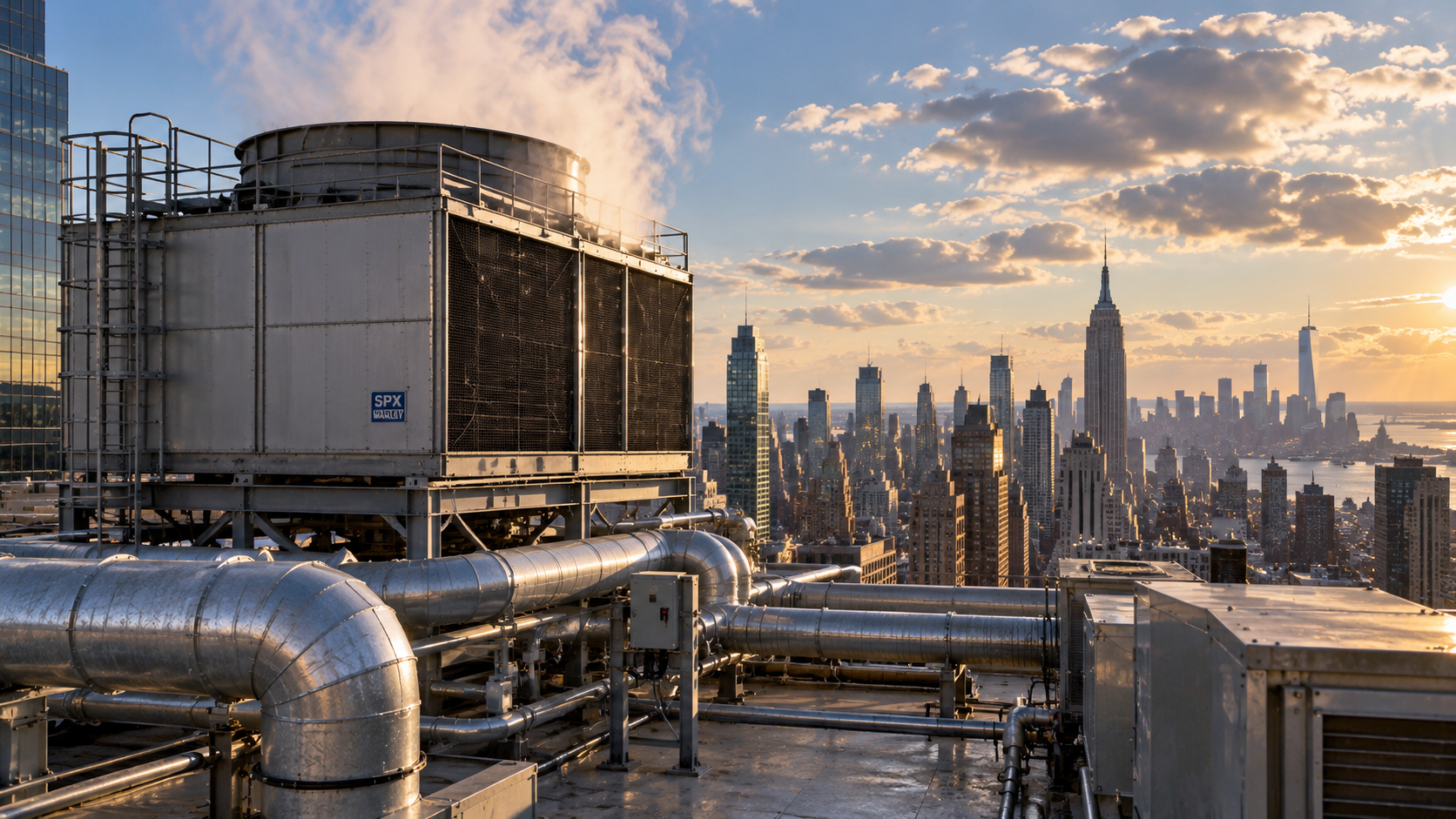
Legionella is a bacterium that grows in warm water, roughly 77 to 113 degrees, especially where there’s stagnation, biofilm, and scale. Cooling towers are a near-perfect habitat: warm, wet, full of nutrients, open to the air. The tower sheds a mist. If the mist carries Legionella and someone downwind inhales it, they can develop a severe pneumonia. Older people, smokers, and anyone with a compromised immune system are most at risk. The fatality rate is around one in ten. You don’t get it from drinking water or from another person; you get it from breathing aerosolized water from a contaminated source.
Which means the outbreak source is almost always a specific tower, and the whole regulatory system is built on knowing where every tower is and testing it regularly. The 2015 South Bronx outbreak, which killed sixteen people, is why the city’s cooling tower rules exist.
The five measures
A joint Health Department and Buildings Department push to find unregistered towers. Towers you don’t know about are towers you can’t test.
A public mapping tool showing every registered tower and its inspection history. This is the good one. It turns compliance into something a neighbor can check.
Faster confirmatory testing methods, so a positive gets confirmed and acted on in days rather than weeks.
Accelerated enforcement hearings at OATH.
A scientific advisory panel on cooling tower technology.
All reasonable. None of them changes the 81 percent by themselves. Compliance is a building owner problem, and building owners skip monthly sampling for the same reason they skip everything: it costs money, nobody checks, and the odds of being the source are low until they aren’t.
Why this is a Long Island story
The New York State sanitary code, Part 4, applies the same cooling tower registration, maintenance, and sampling requirements statewide. That includes every large commercial building, hospital, nursing home, and hotel on Long Island with a tower on the roof. The city has an inspection program and still runs at 81 percent. The counties out here have fewer inspectors and, I’d bet, a lower number, though nobody’s publishing it.
Building water management plans, the ASHRAE 188 document that lays out how a facility controls Legionella across all its water systems, are an underserved line of work in this region. Most buildings that are required to have one have a binder someone wrote in 2017. If you manage a building with a tower, a decorative fountain, a spa, or a complicated hot water system, that binder is the thing that gets read after the outbreak. Read it before.
What we know
- Upper East Side cluster: 94 confirmed cases as of August 31, 2026.
- City announced five measures September 1: unregistered-tower enforcement push, public tower map with inspection history, faster confirmatory testing, accelerated OATH hearings, scientific advisory panel.
- Citywide monthly sampling compliance: 81% in late August.
What we don’t know yet
- The identified source tower(s) for the cluster.
- Final case and fatality count.
- Cooling tower compliance rates in Nassau and Suffolk.
Key facts
NYS Part 4 sanitary code applies cooling tower requirements statewide. Source: NYSDOH.
Sources
NYC Mayor’s Office, September 1, 2026: https://www.nyc.gov/mayors-office/news/2026/09/mayor-mamdani-announces-sweeping-new-measures-to-strengthen-new-
Corrections: If we got something wrong, tell us at kelly.sacredintel@gmail.com. We fix errors publicly and note the change here.