Disclosure: I run a company that sells home water testing kits, including for PFAS. That’s a conflict of interest on this story. I’m disclosing it, not selling anything.
Let’s do the math first, because the math is the story.
The Department of Defense extended PFAS cleanup timelines at 243 installations. It’s the third such extension in roughly a year. Joint Base San Antonio moved 13 years. Fairchild Air Force Base in Washington moved 12. More than 40 of the affected sites have PFAS detected in the drinking water supplies of the communities around them. A senior Pentagon official explained the delays about as honestly as you’ll hear anyone in that building explain anything: every time they dig into a site, they find more work.
I believe that. That’s what site investigation is. You find a plume, you chase it, it’s bigger than you thought, you drill more wells, it’s bigger still. Anyone who’s run a Phase II knows the feeling. PFAS is worse than most contaminants for this because it moves with groundwater, it doesn’t break down, and the detection limits keep getting lower, so the plume you mapped in 2020 looks bigger in 2026 even if nothing moved. I’m not here to tell you the delay is fake.
I’m here to tell you what 13 years is.
Thirteen years, in human units
A kid who’s five today will be in college. A pregnant woman today will have a teenager. A well that’s contaminated today will still be contaminated. And the thing standing between that well and that kid, for 13 years, is a list of “interim measures.” Bottled water. A filter under the sink. Some soil hauled off. A groundwater pump-and-treat system humming in the background.
Interim measures work. That’s the sentence you’ll hear from the Pentagon and from EPA, and it’s true. Here’s the rest of the sentence: interim measures work if somebody checks them.
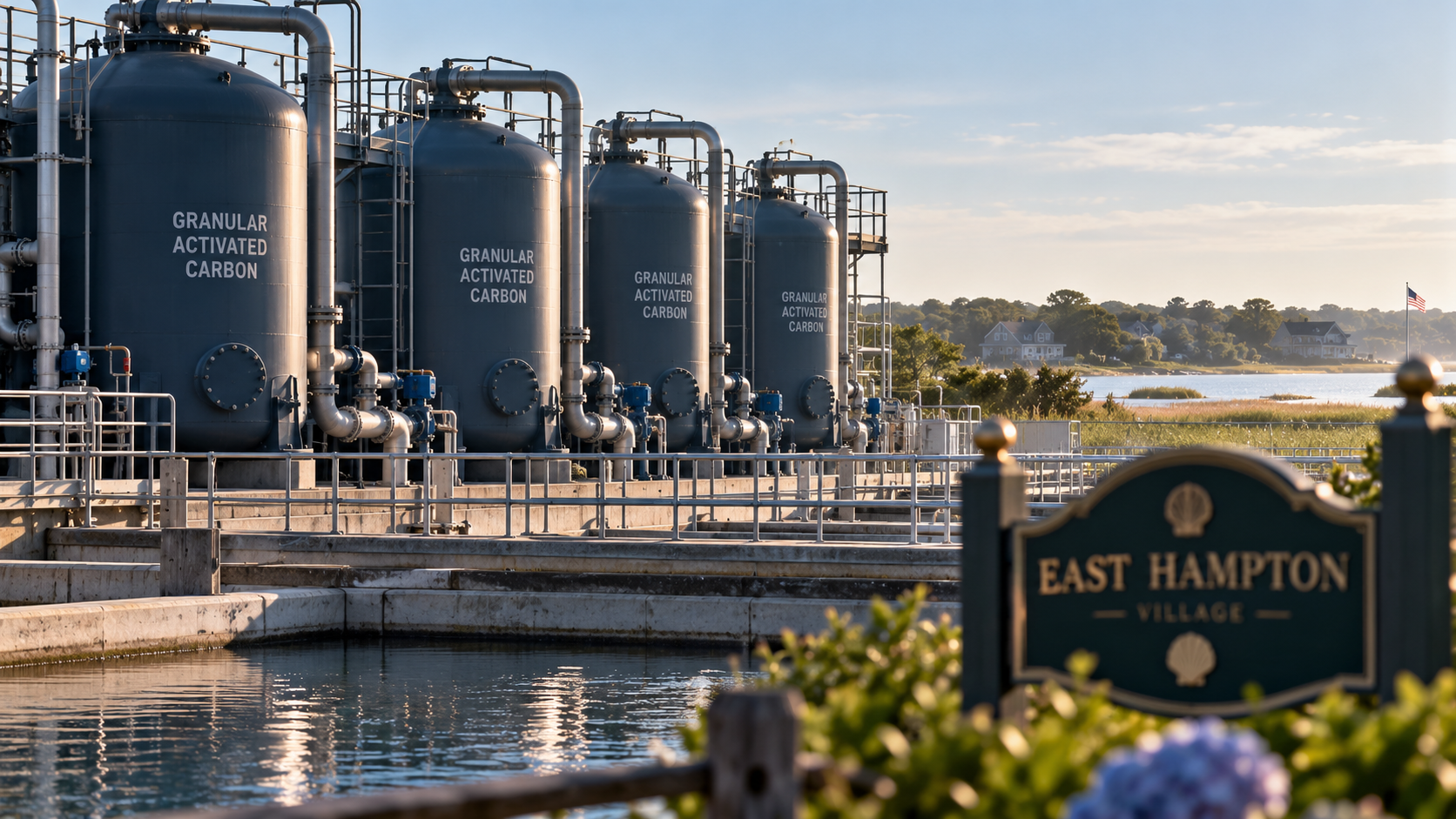
A point-of-use filter removes PFAS until it doesn’t, and it doesn’t tell you when it stopped. Granular activated carbon has a capacity. When it’s full, the PFAS goes straight through, and the water tastes exactly the same. A bottled water program works until a delivery gets missed or a family moves in and doesn’t know they’re supposed to be on it. A pump-and-treat system works until the carbon vessels are spent, and the schedule for changing them out is a line item somebody has to fund every year for 13 years.
Every one of those has a verification step. Effluent sampling on the filter. A change-out log. A well test. And when a federal cleanup gets pushed out past a decade, that verification step lands, in practice, on the household. Nobody voted for that. It’s just where the responsibility falls when the timeline stretches and the agency’s attention moves to the next site.
Why this is a Long Island story
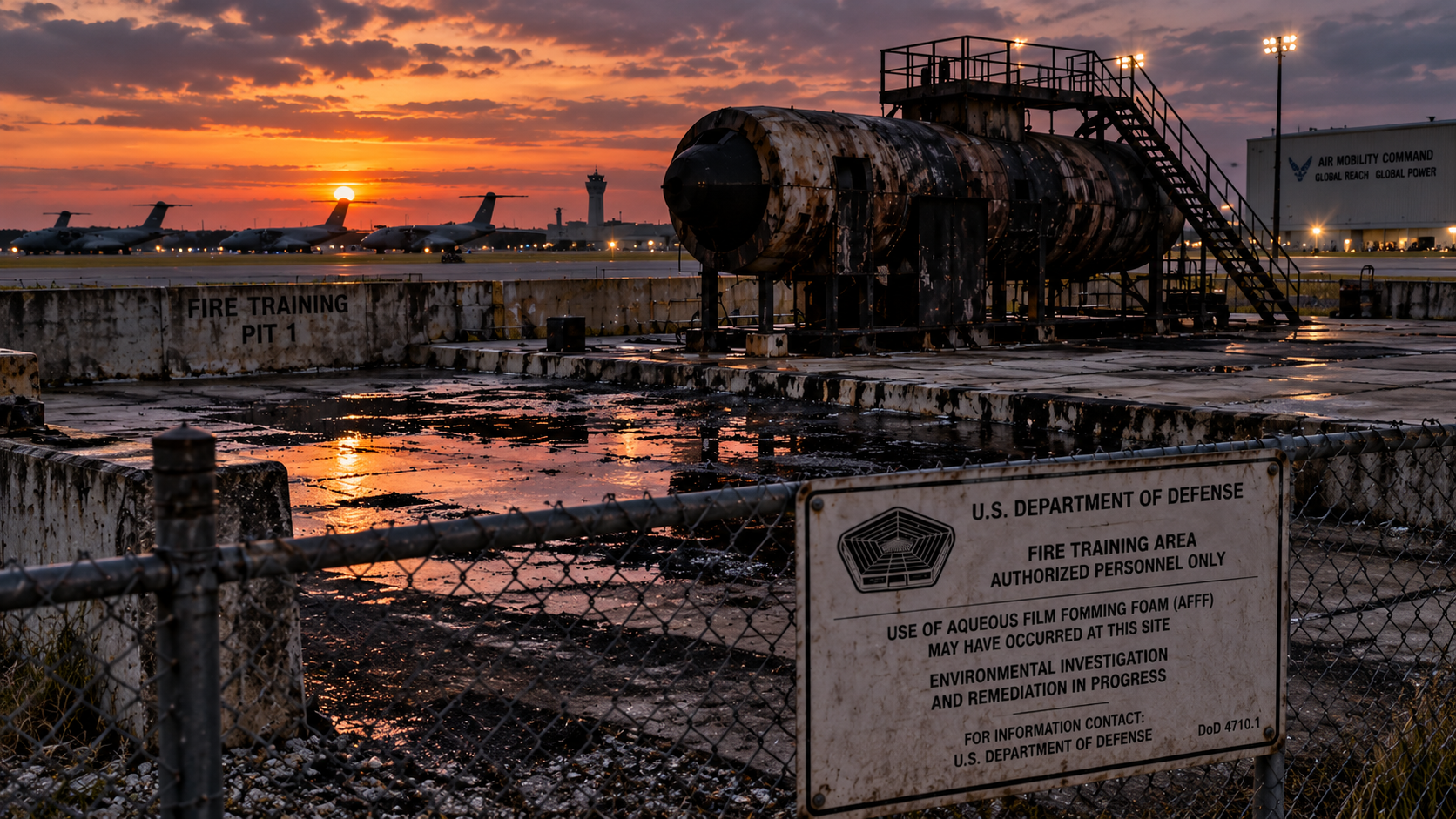
We have our own defense-legacy plumes. The Navy-Grumman plume in Bethpage, which has been moving south through the aquifer for decades. Calverton, the former Grumman test site out east. Gabreski, the Air National Guard base in Westhampton, where firefighting foam did what firefighting foam does everywhere it was used.
The names are different. The physics is the same. A plume, a schedule, a schedule that moves, and people on private wells or municipal water in between. If you live near any of those, the DoD story isn’t about Texas or Washington State. It’s a preview of the next three extension announcements.
What I’d tell a neighbor
Find out what your water system tests for and how often. Most Long Island water districts publish PFAS results now; read them, don’t just check that the report exists. If you’re on a private well within a couple miles of a known plume, that’s on you. Nobody’s coming. “The cleanup is scheduled” is not a test result, and “the cleanup is scheduled for 2039” is a reason to get one.
And if you’re on interim measures because a federal agency put you there: ask who’s verifying them, and how often, and get it in writing. You’ll learn a lot from how long it takes them to answer.
What we know
- DoD extended cleanup timelines at 243 installations; the third extension in roughly a year.
- More than 40 of those sites have PFAS detected in nearby drinking water supplies.
- Joint Base San Antonio: timeline extended 13 years. Fairchild AFB: 12 years.
- Interim measures at affected sites include bottled water, home filtration, soil removal, and groundwater treatment.
What we don’t know yet
- Which specific New York sites moved, and by how much. NOTUS reported the national picture; the site-level table needs to be pulled.
- Whether interim-measure verification is being tracked at the household level anywhere.
- Whether any of the extended timelines will be extended again.
Key facts
- 243 installations affected. Source: NOTUS, September 2–3, 2026.
- 40+ sites with PFAS in nearby drinking water. Source: NOTUS.
Sources
NOTUS, “Pentagon Delays PFAS Cleanup at Over 200 Military Sites for the Third Time”: https://www.notus.org/climate-environment/pentagon-delays-pfas-cleanup-200-military-sites-third-time
Corrections: If we got something wrong, tell us at kelly.sacredintel@gmail.com. We fix errors publicly and note the change here.