Two developments in the PFAS turnout gear litigation this week, and together they’re the sharpest example I know of the thing I say in every hierarchy-of-controls class: personal protective equipment is the last resort because it’s the control most likely to fail, and sometimes it’s the hazard.
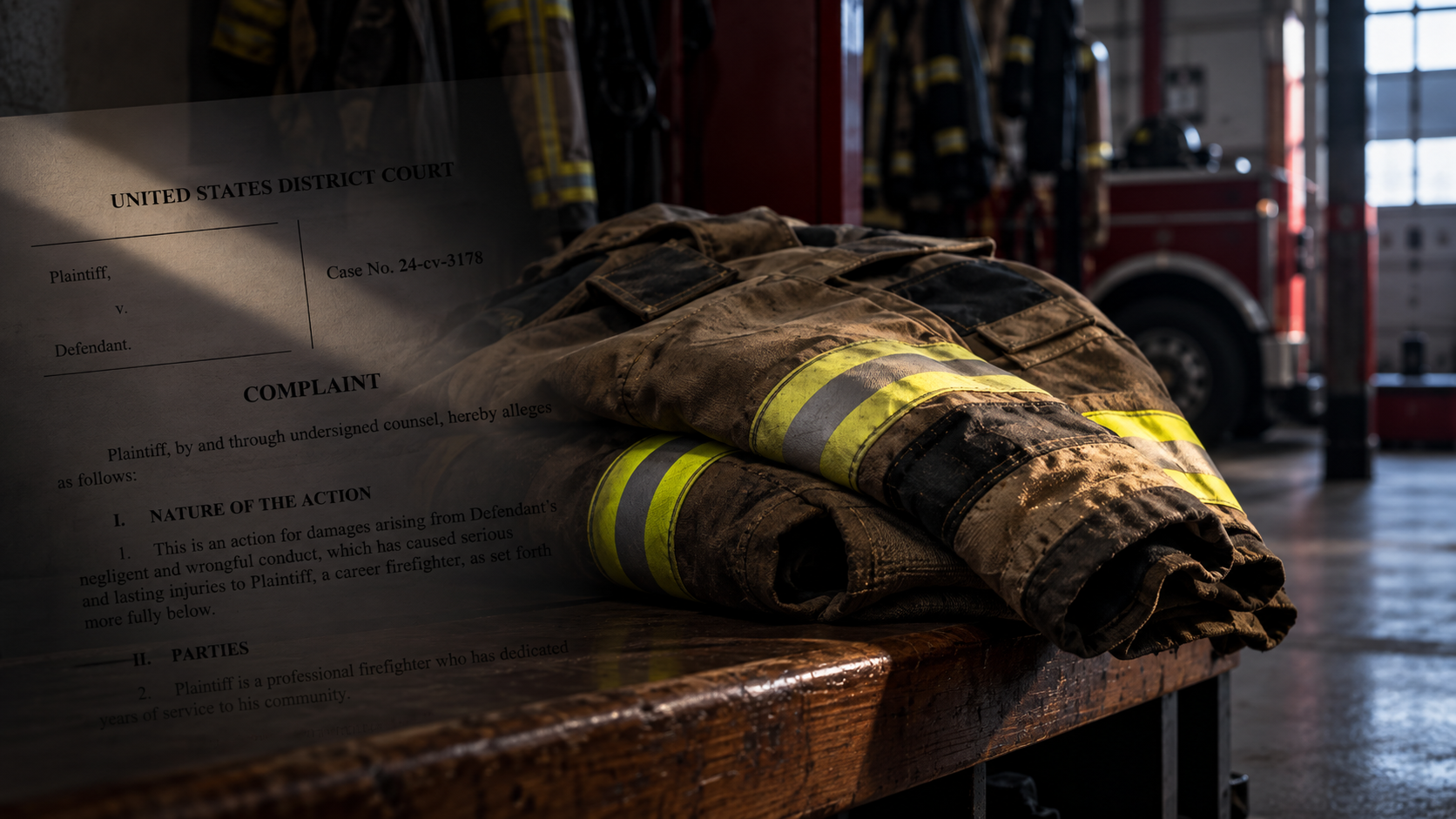
A court allowed Connecticut firefighters’ claims against 3M and DuPont to proceed. Separately, 28 municipalities, fire districts, and volunteer departments, from Albuquerque and Gary down to small companies in Texas and West Virginia, filed a federal RICO claim in the District of Minnesota as part of the multidistrict litigation, MDL No. 3191. The complaint names 23 defendants: 3M, DuPont-related entities, Corteva, and the gear manufacturers Globe, Lion, Fire-Dex, Morning Pride/Honeywell, and Innotex. The allegation is an association-in-fact enterprise to conceal PFAS content in turnout gear while marketing it as safe.
RICO is the racketeering statute. Using it in a product case is aggressive; the plaintiffs are saying this wasn’t negligence, it was coordination. Whether that holds up is for the court. What’s not in dispute anymore is what’s in the gear.
What’s in the gear
Turnout gear, the coat and pants a structural firefighter wears into a fire, is three layers: an outer shell, a moisture barrier, and a thermal liner. The moisture barrier has for decades been a PFAS-based membrane, and the outer shell has been treated with PFAS-based water and oil repellents. That’s why it sheds water and doesn’t soak through with fuel and chemicals. It’s also why testing has found PFAS in the fabric at levels that would be a cleanup problem in soil, and why firefighters’ blood PFAS levels run higher than the general population’s.
The gear is worn against the skin, in heat, with sweat, for hours. The PFAS migrates. It’s in the dust in the apparatus bay. It’s on the hands that eat lunch. The exposure isn’t from the fire. It’s from the equipment issued to fight it.
Why this reframes hazard assessment
In the standard model, PPE sits at the bottom of the hierarchy of controls because it doesn’t remove the hazard, it just puts a barrier between the hazard and the worker, and barriers fail. That’s the reason to prefer elimination, substitution, engineering, and administrative controls first.
This case adds a second reason. The barrier itself can be a source. Nobody assessed the turnout gear as a chemical exposure because it was the control, not the hazard, and the hazard assessment form doesn’t have a box for “what is the PPE made of.” Now it does, or it should.
There’s a hard part here I don’t want to skip. Turnout gear that’s PFAS-free doesn’t exist at scale yet. The moisture barrier is the problem, and the alternatives are still being tested for the thermal and water performance that keeps a firefighter alive in a flashover. So “stop using it” isn’t an option today. What is an option: fewer hours in gear when there’s no fire, clean gear stored away from living quarters, no gear in the cab, wash hands before eating, and pressure on the manufacturers to finish the substitution. That’s the hierarchy of controls applied to the control itself.
I’d expect fire service clients to start asking for gear inventories, wipe sampling in bays and on gear, and PFAS-free procurement specs, and I’d expect the same questions to migrate to other categories: chemical-resistant gloves, waterproof workwear, arc-flash clothing. Anything treated for repellency. The question “what’s this made of” was always a fair one. Now it’s in a federal complaint.
What we know
- A court allowed Connecticut firefighters’ PFAS turnout gear claims against 3M and DuPont to proceed (September 15, 2026).
- 28 municipalities, fire districts, and volunteer departments filed a federal RICO claim in D. Minn. as part of MDL No. 3191, naming 23 defendants including 3M, DuPont-related entities, Corteva, Globe, Lion, Fire-Dex, Morning Pride/Honeywell, and Innotex.
- Allegation: an association-in-fact enterprise to conceal PFAS content in turnout gear while marketing it as safe.
What we don’t know yet
- Whether the RICO theory survives a motion to dismiss.
- Timeline for the MDL.
Sources
Fire Law Blog, September 14, 2026: https://firelawblog.com/2026/09/14/fire-departments-allege-racketeering-in-pfas-turnout-gear-lawsuit/
Corrections: If we got something wrong, tell us at kelly.sacredintel@gmail.com. We fix errors publicly and note the change here.