Two PFAS stories landed in the same week, and I want to put them next to each other because together they say something to contractors that neither one says alone.
The first: on November 5, the Environmental Working Group published its analysis of the EPA’s final round of national drinking-water testing, the UCMR 5 data the agency finished releasing in August. EWG’s count is that water systems serving 197 million people have PFAS in them. That’s 23 million more people than the previous count, and EWG’s own scientist was careful to say it doesn’t mean contamination is getting worse; it means testing got better. Either way, a majority of the country drinks water with detectable PFAS, and the EPA estimates nearly 8 percent of systems would exceed the limits for PFOA or PFOS, the same limits the agency is now proposing to delay to 2031 while it drops four of the six it set in 2024.
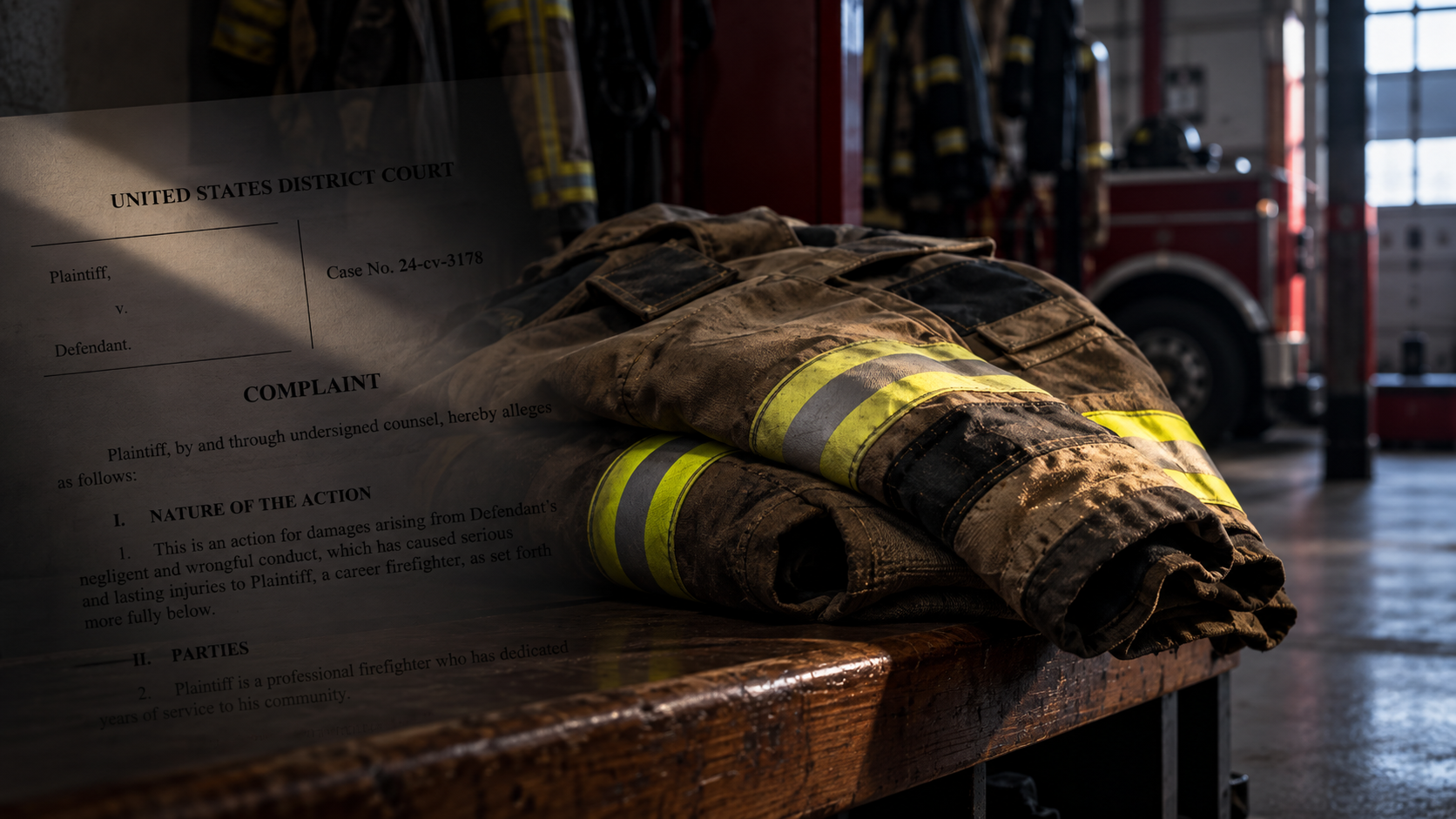
The second: on November 3, 3M signed a conditional agreement to pay up to $7.35 billion to somewhere between 115,000 and 120,000 people with personal-injury claims from firefighting foam. I wrote about the terms last week. The part that matters for this piece is how a person qualifies. You need one of six diagnoses, and you need to show exposure, either through drinking water you can document or, in the settlement’s words, “direct exposure,” which in practice means you handled the foam. The award is scored on diagnosis plus exposure. More documented exposure, higher score.
Read that again from the perspective of a laborer who spent 2019 to 2023 in open excavations at a former fire training site, breathing dust and standing in groundwater, and has no idea what was in either one. He has no exposure records. His employer has no exposure records. If he gets kidney cancer at 54, he’s a “direct exposure claimant” who can’t document direct exposure, which makes him a drinking-water claimant from a town whose water was fine.
That’s the lesson. The settlement pays on paper, and construction doesn’t keep the paper.
What’s Actually In The Ground Here
Long Island sits on a sole-source aquifer, and the PFAS in it isn’t theoretical. Gabreski Airport in Westhampton, where AFFF was used for decades, has a plume that reached private wells. The Navy and Grumman site in Bethpage. Fire training grounds in Yaphank and across the county. The East Hampton battery-plant fire that sent a PFAS nobody was testing for into the Wainscott wells. MacArthur Airport. Every volunteer firehouse that trained with foam in the parking lot through the 1990s. The county’s own hazardous-materials sites. And the landfills, which took everything PFAS-treated for fifty years and are now leaching it.
If you do site work in Suffolk or Nassau, you have dug in PFAS-impacted soil. You’ve dewatered a PFAS-impacted excavation. You’ve loaded PFAS-impacted material into a truck. You just didn’t know, because nobody tested, because nobody made you.
Here’s what the exposure looks like on a job. Dust from excavation and loading, inhaled and swallowed. Mud on hands and forearms, then lunch. Groundwater in the hole, on boots, on clothes, sometimes in the face when a pump line lets go. Sediment on the equipment that gets pressure-washed at the yard and goes down the drain. None of this is a dramatic exposure; it’s a daily one, over a career, which is exactly the kind PFAS is built for.
Why “There’s No OSHA Limit” Is Not A Defense
There’s no OSHA permissible exposure limit for any PFAS. There’s no NIOSH recommended limit either; NIOSH published a research agenda on it in 2022 and the short version is “we don’t know enough yet.” So when a contractor says “there’s no standard,” they’re right, and it doesn’t help them.
Three things still apply.
The general duty clause. OSHA can cite you for a recognized hazard without a specific standard, and PFAS at a known contaminated site is now about as recognized as a hazard gets.
HAZWOPER. If the site is a state or federal cleanup, 29 CFR 1910.120 applies to the workers on it: training, medical surveillance, site-specific health and safety plan, air monitoring. A lot of PFAS excavation on Long Island is happening under DEC remedial programs, and I have watched crews on those sites with no HASP, no training records, and a site safety officer who was also the foreman.
Exposure records. 29 CFR 1910.1020 requires that if you create records of employee exposure to toxic substances, you keep them for 30 years and give employees access. The trap is the “if.” Most contractors never create the record, so there’s nothing to keep. That’s legal. It’s also exactly how you end up with a workforce that can’t document anything.
The 3M settlement adds a fourth reason that isn’t in any regulation. The people being paid this year are being paid because someone, somewhere, wrote down what they were exposed to. Firefighters have training logs. Base residents have water records. Your laborer has a timesheet that says “Yaphank job.”
What To Write Down, Starting This Month
This isn’t a HASP template. It’s the minimum paper that would let a worker, or a widow, or your own defense attorney, reconstruct an exposure twenty years from now.
Before you dig: know what’s there. Phase I environmental site assessments have included PFAS as a “non-scope consideration” since the 2021 ASTM update, and in New York DEC requires PFAS sampling in remedial investigations. Ask the owner for the Phase I and any sampling data. If there’s a DEC site number, pull the file; it’s public. If it’s a fire training site, an airport, a landfill, or within a mile of one, and nobody’s tested, say so in writing before mobilizing. The email you send is the record.
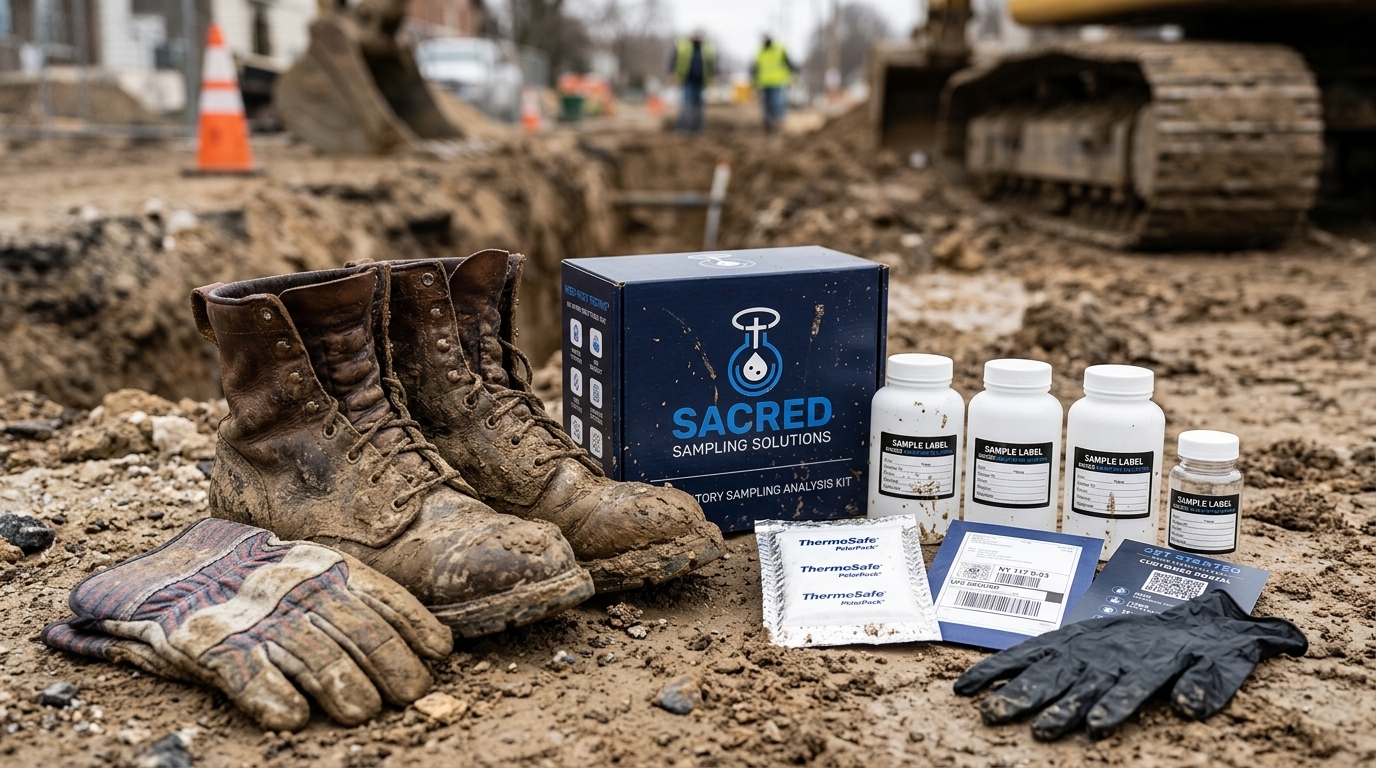
Sample the soil and the water once. A PFAS soil sample and a groundwater sample from the excavation, by EPA Method 1633, costs a few hundred dollars each at a certified lab. One round at mobilization characterizes what the crew is working in. That number in a file is worth more than any amount of “we didn’t know.”
Log who was in the hole. By name, by day, by task: excavation, dewatering, loading, equipment cleaning. The daily report already exists; add a line. Thirty years from now the question is going to be “was he on that job,” and the timesheet that says “Yaphank” won’t answer it.
Log the dewatering. Gallons pumped, where it went, whether it was treated. Pumping PFAS groundwater into a storm drain or a recharge basin is a SPDES issue today and a liability tomorrow. If the discharge permit didn’t mention PFAS, say so in the file.
Log the soil. Where it went, by load. Landfills are starting to refuse or surcharge PFAS-impacted material, and “beneficial use” on another site is how a plume gets a second address. The manifest is the record.
Controls, written down. Wet methods for dust. Gloves and washing before eating, which sounds like kindergarten and is the single biggest dermal-ingestion control there is. Boot wash before the truck. Clothes that stay at the job. Air monitoring if there’s visible dust from impacted material; a personal sample for particulate, with the PFAS fraction analyzed, is possible and nobody does it. If you do nothing else, document that you told the crew what was in the ground and what to do about it, with signatures.
Offer a blood test, and keep the result. A PFAS serum panel runs a few hundred dollars. The National Academies recommended in 2022 that people with known exposure get one. For a crew that’s spent a season in an AFFF plume, it’s a baseline. For the contractor, it’s the only kind of exposure record a court has ever understood.
The Part About My Company
I run a company that sells lab-analyzed home testing kits, including PFAS in water, and I’ll say the quiet part: the overlap between “what a contractor should test on site” and “what I sell to homeowners” is real, and you should read this knowing it.
But the reason I built the company is the same reason I’m writing this. I spent fifteen years as the safety person on heavy civil jobs, and the pattern never changed: the people with the exposure were the last to find out what it was, and they found out from someone with a reason to minimize it. The 3M settlement is 115,000 people who finally got a number put on what happened to them, and the ones who can prove the most get the most. Your crew is going to be in that line someday, for some defendant. Give them the paper.
What We Know
- EWG analysis released November 5, 2026 (reported November 6): PFAS detected in systems serving ~197 million people, 23 million more than prior count. Based on EPA UCMR 5 data, final release August 27, 2026: ~2 million results from 10,000+ systems, 29 PFAS plus lithium; EPA estimates 7.8% of systems would exceed the PFOA or PFOS MCL.
- EPA has proposed keeping the 4 ppt PFOA/PFOS limits, withdrawing the other four 2024 limits, and extending compliance from 2029 to 2031.
- 3M Master Settlement Agreement, November 3, 2026: up to $7.35B nominal, $5.8B present value, ~115,000–120,000 eligible claimants; six eligible diagnoses; exposure via documented drinking water or “direct exposure” (handling AFFF); awards point-scored on diagnosis and exposure.
- No OSHA PEL or NIOSH REL for any PFAS. 29 CFR 1910.1020 requires 30-year retention of exposure records that are created. HAZWOPER applies on regulated cleanup sites.
- NYSDEC requires PFAS sampling in remedial investigations; ASTM E1527-21 lists PFAS as a non-scope consideration for Phase I ESAs.
What We Don’t Know Yet
- What we don’t know
- How many Long Island excavation contractors currently sample for PFAS before mobilizing; I’m aware of none that do it as policy.
- Whether the EPA’s proposed delay to 2031 and withdrawal of four limits will survive litigation.
Sources
- WRAL, November 6, 2026, EWG analysis
- EWG PFAS contamination map
- Water Online, September 2, 2026, EPA final UCMR 5 release
- 3M press release and Master Settlement Agreement, November 3, 2026
- OSHA, 29 CFR 1910.1020, Access to Employee Exposure and Medical Records
- NIOSH, PFAS research agenda
- NYSDEC, Sampling, Analysis, and Assessment of PFAS under DEC’s Part 375 Remedial Programs
- National Academies, Guidance on PFAS Exposure, Testing, and Clinical Follow-Up (2022)
Corrections: kelly.sacredintel@gmail.com